Check Out Our Reviews!

Looking for a diesel smog check near South El Monte? We test your heavy-duty diesel trucks on site and file the results straight with CARB.
South El Monte isn’t a pass-through town. With over 44,000 people showing up to work here every day across more than 2,400 businesses packed into less than three square miles, this city runs on commercial activity and commercial activity runs on trucks. When your truck loses its compliance status, you’re not just dealing with a paperwork headache. You’re looking at a DMV registration hold that grounds your vehicle until it’s resolved.The I-10, SR-60, and I-605 all converge right here. That means CARB’s roadside emissions monitoring equipment is operating on the same corridors your truck uses every single day. A flagged truck gets a Notice to Submit to Testing with a 30-day window to respond. Miss it, and the fines can reach $10,000 per vehicle per day. For an owner-operator running one or two trucks out of a yard off Rosemead Boulevard, that’s not a fine that’s a business-ending number.
Getting compliant means your registration clears, your truck stays on the road, and you’re not spending your week navigating a government portal trying to figure out what went wrong. That’s the outcome. That’s what this is actually about.
We are a CARB-credentialed Clean Truck Check testing provider serving Los Angeles County, including South El Monte and the broader San Gabriel Valley freight corridor. Every tester on our staff has completed CARB’s official Heavy-Duty Inspection and Maintenance training, passed the required state exam, and holds a credential that’s publicly listed in CARB’s own tester database. You can look it up before you ever call.
This isn’t a general smog shop that added a new service line when the regulations changed. Our entire operation is built around one thing: getting 2013-and-newer heavy-duty trucks through the Clean Truck Check process correctly, the first time, with results submitted directly to CTC-VIS the moment the test is done. No manual uploads. No portal confusion. No follow-up calls wondering if your record updated.
South El Monte’s industrial base the warehouses, the freight depots, the distribution operations running off the I-605 and SR-60 that’s exactly who we built this service for.

The process starts with a quick eligibility check. Your truck needs to be model year 2013 or newer with a GVWR over 14,000 pounds that’s the population CARB’s Clean Truck Check program covers. If you’re not sure whether your vehicle qualifies, a short conversation handles that before you book anything.
From there, one of our CARB-credentialed testers comes to your location your yard, your loading dock, your fleet lot, wherever the truck is. The test itself is an OBD-based emissions scan using CARB-certified equipment, not a generic diagnostic tool. That distinction matters because a test performed with non-approved equipment won’t be accepted by CARB, which means you’d be starting over. Once the scan is complete, we submit results electronically and directly to CARB’s CTC-VIS database on the spot. Your compliance certificate is issued, your record updates, and any DMV registration hold tied to that vehicle begins to clear.
For South El Monte fleet operators managing multiple trucks across different compliance deadlines, the same process applies at scale all vehicles tested in a single visit, all results submitted in real time. No separate trips. No staggered paperwork. Given that semi-annual testing is already required in 2025 and quarterly testing takes effect by October 2027, building this into your regular operational schedule now is a lot easier than scrambling when the next deadline hits.

Ready to get started?
Every Clean Truck Check we perform covers the full scope of what CARB requires: an OBD-based emissions scan using state-certified equipment, direct electronic submission to CARB’s CTC-VIS system, and issuance of your compliance certificate. You don’t manage the portal. You don’t handle the upload. We do it, and it’s done.
This service is built specifically for 2013-and-newer diesel and alternative-fuel heavy-duty vehicles with a GVWR over 14,000 pounds the exact vehicles California’s Clean Truck Check program targets. Older trucks and lighter vehicles fall outside this program entirely, so if you’re unsure whether your truck qualifies, that gets sorted before any test is scheduled.
For truck owners and fleet managers operating in South El Monte’s industrial corridor whether you’re running freight off the I-10, staging out of a warehouse near Rush Street, or managing a small fleet for a business in the 91733 zip code we bring the service to you. Mobile testing means your trucks don’t have to move to get compliant. And for out-of-state carriers making regular deliveries into California through the SR-60 and I-10 corridors, California’s CARB compliance requirement applies regardless of where your truck is registered. If it’s operating on California roads, it needs a valid certificate. We can test it, certify it, and get that record into CTC-VIS before your next run.
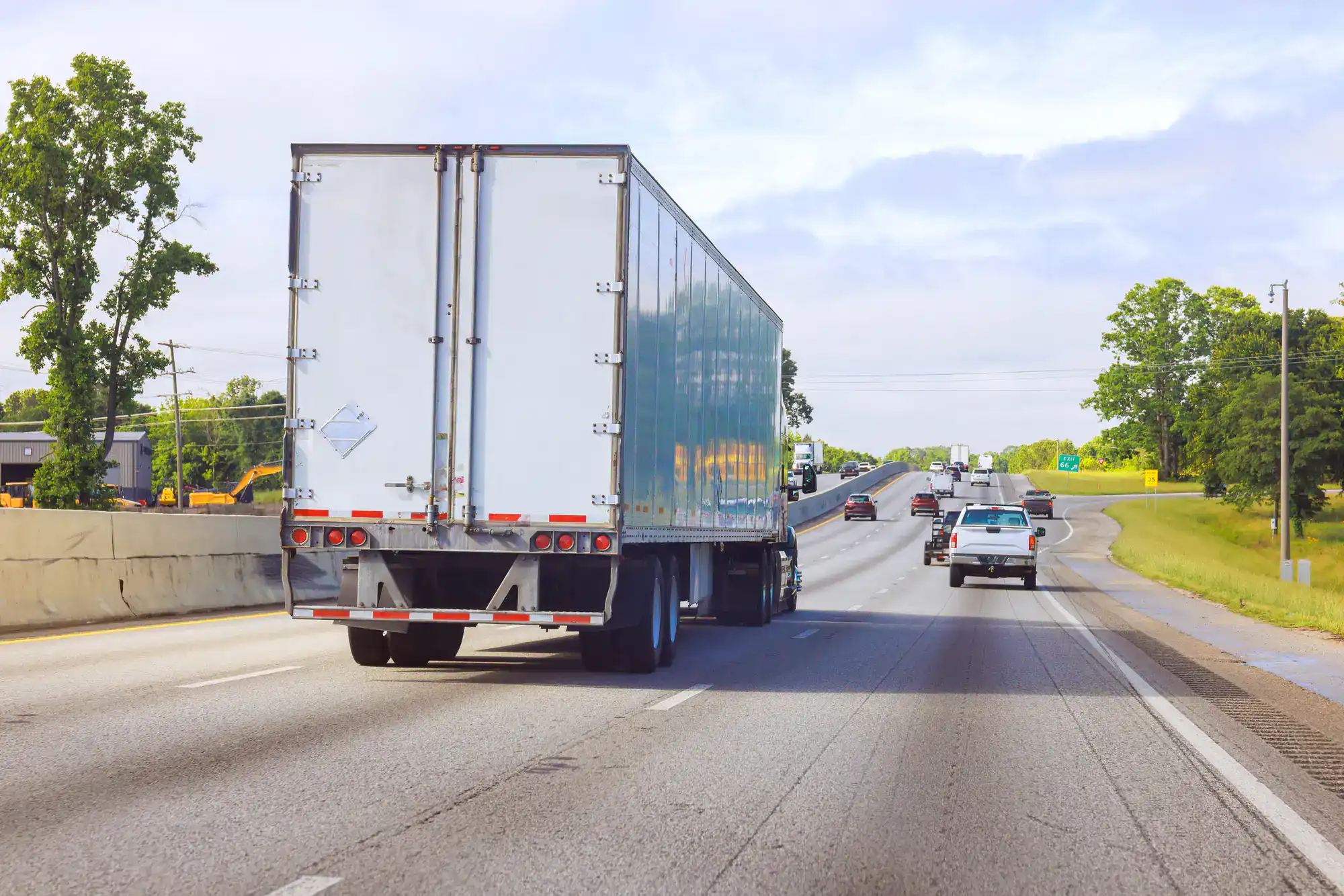
If your truck is model year 2013 or newer and has a GVWR over 14,000 pounds, yes CARB’s Clean Truck Check program applies to it. It doesn’t matter whether the truck is registered in California or another state. What matters is whether it operates on California public roads. South El Monte sits at the junction of the I-10, SR-60, and I-605, which puts it squarely in one of the most actively monitored freight corridors in the state. If your truck is running loads in or out of the San Gabriel Valley, it’s in CARB’s jurisdiction.
The compliance requirement includes paying an annual fee of $31.18 per vehicle through CARB’s CTC-VIS system and submitting to OBD-based emissions testing on a semi-annual schedule as of 2025, with quarterly testing taking effect by October 2027. Missing a deadline triggers a DMV registration hold that grounds the vehicle until the record is updated. Getting tested and submitted through us clears that process efficiently no portal navigation required on your end.
A failed OBD scan typically means the truck’s onboard diagnostic system is flagging an active fault code related to emissions controls something like a malfunctioning DPF, a failed EGR system, or an issue with the SCR catalyst. The test result gets submitted to CARB’s CTC-VIS regardless of pass or fail, so the record reflects that a test was attempted. From there, you’ll have a window to address the underlying mechanical issue and retest.
The important thing is not to delay. South El Monte’s industrial operators and owner-operators running freight off the SR-60 and I-10 corridors can’t afford extended downtime. Getting the truck to a qualified diesel mechanic quickly one who understands heavy-duty emissions systems, not just general diesel repair is the fastest path back to compliance. Once the repair is done and the fault codes are cleared, a retest through us gets the passing result submitted to CTC-VIS and your compliance certificate issued.
As of 2025, most qualifying heavy-duty trucks are required to test twice per year semi-annually. That’s already a change from the earlier annual testing schedule, and it’s not the last change coming. By October 2027, the testing frequency escalates to quarterly for most vehicles, meaning four tests per year.
For South El Monte truck owners who built their schedule around one compliance check tied to registration renewal, this is a real operational shift. The way to handle it without it becoming a recurring disruption is to treat it the same way you treat any other scheduled maintenance build it into your calendar now, before the quarterly requirement takes effect. We serve the South El Monte area with mobile testing, which means the test comes to your location. There’s no pulling a truck off a run to drive it somewhere. You schedule it, we show up, and you’re done.
Yes. CARB’s Clean Truck Check program applies to any qualifying heavy-duty truck operating on California public roads registration state is irrelevant. A truck registered in Texas, Arizona, Nevada, or anywhere else that makes regular runs into California needs a valid compliance certificate in CARB’s CTC-VIS system.
This catches a lot of carriers off guard, especially those making deliveries to South El Monte’s warehouses and distribution operations along the I-10 and SR-60 corridors. The first notice many out-of-state drivers receive is a roadside emissions monitoring flag or a freight broker requirement that surfaces during a load negotiation. At that point, the clock is already running. We can test your out-of-state-registered truck, submit the results directly to CTC-VIS, and get your certificate issued before your next California delivery. The process is the same regardless of where the truck is registered what matters is that the vehicle qualifies by model year and GVWR, and that the test is performed with CARB-certified equipment by a credentialed tester.
Yes. Mobile fleet testing is a core part of how we operate. If you’re managing multiple trucks out of a South El Monte yard, warehouse, or fleet depot whether that’s in the 91733 zip code or at a facility near the I-605 interchange all vehicles can be tested in a single scheduled visit. Results for each truck are submitted directly to CARB’s CTC-VIS system in real time, so every vehicle’s compliance record updates the same day.
For fleet managers, this matters beyond just convenience. With semi-annual testing already in effect and quarterly testing on the horizon, keeping track of individual compliance deadlines across five, ten, or fifteen trucks is a real administrative burden. Consolidating tests into scheduled visits rather than chasing down each truck separately as deadlines approach keeps the whole fleet current without it becoming a part-time job. South El Monte’s density of logistics and industrial operations means a lot of fleets are running tight schedules. Mobile testing is built for exactly that situation.
A DMV registration hold for CARB non-compliance clears when your truck’s compliance record in CARB’s CTC-VIS system is updated with a valid, passing test result. The hold doesn’t clear through DMV directly it clears because CARB’s system communicates the updated status. That means the fastest path to clearing the hold is getting the OBD test done and the results submitted to CTC-VIS as quickly as possible.
In South El Monte, where owner-operators often depend on a single truck for their income and can’t absorb days of downtime, this matters in a very direct way. A grounded truck isn’t just an inconvenience it’s lost revenue. We perform the test using CARB-certified equipment, submit results electronically to CTC-VIS on the spot, and get your compliance certificate issued the same day. Once the record updates in CARB’s system, the registration hold begins to resolve. If you’re also behind on the annual $31.18 CTC compliance fee, that needs to be paid through the CTC-VIS portal as well both the fee and the passing test result are required for full compliance status.
Useful Links
Other Services we provide in South El Monte