Check Out Our Reviews!

A valid compliance certificate does more than satisfy a state requirement. In Palm Springs, it determines whether your truck gets through the gate. Hotels, resorts, and property managers along the SR-111 corridor are increasingly asking for proof of CARB compliance before allowing delivery and service vehicles onto their properties. Freight brokers awarding loads in the Coachella Valley are doing the same. If you can’t produce a current certificate, you lose the job it’s that simple.
There’s also the I-10 factor. The stretch of freeway running through Palm Springs the Sonny Bono Memorial Freeway is one of the most heavily monitored commercial corridors in California. CARB deploys remote emissions monitoring devices along major freight routes, and I-10 is a priority. Your truck can be flagged without ever being pulled over. When that happens, you get a Notice to Submit to Testing with a 30-day window to comply. Testing proactively with us means you’re never in that position.
And then there’s the desert heat. Palm Springs regularly hits 115°F in summer. That kind of sustained heat puts real stress on diesel particulate filters and emissions control systems. A truck that passed its OBD scan in February can develop fault codes by July. Getting tested before your deadline not after a fault code shows up is the difference between a clean result and an expensive scramble.
We are a CARB-credentialed Clean Truck Check testing provider serving Los Angeles and Riverside County the county where Palm Springs, Cathedral City, Desert Hot Springs, and Thousand Palms all sit. Every tester on our team has completed CARB’s official HD I/M Tester Training Course, passed the state exam, and appears on CARB’s publicly searchable list of credentialed testers. That credential is renewed every two years. You can verify it before you book a single appointment.
Our testing equipment is CARB-certified not a generic OBD scanner from an auto parts store, but a device specifically approved by the California Air Resources Board for Clean Truck Check compliance testing. That distinction matters because a test performed with non-approved equipment won’t be accepted by CARB, regardless of the result. When a test is completed, results go directly into CARB’s CTC-VIS system. You don’t touch the portal. You get your compliance certificate. That’s it.
We focus specifically on model year 2013 or newer heavy-duty trucks with a GVWR over 14,000 pounds. That’s the only vehicle population we test no passenger cars, no older trucks, no lighter vehicles. That focus is what makes the difference for Palm Springs-area operators who need a provider that understands the specific compliance demands of the Coachella Valley.

It starts with confirming your truck qualifies. The Clean Truck Check program applies to diesel and alternative-fuel heavy-duty vehicles that are model year 2013 or newer with a GVWR over 14,000 pounds. If your truck meets both of those criteria and operates on California public roads including I-10 through the Coachella Valley it’s subject to the program. That includes trucks registered in Arizona, Nevada, or any other state. Registration location doesn’t exempt you from California’s requirement.
Once eligibility is confirmed, we perform the OBD scan using CARB-certified testing equipment. The scan reads your truck’s onboard diagnostic system and checks for active fault codes related to emissions control. The process itself is straightforward and doesn’t take long. What matters is that the equipment is approved and the tester is credentialed both of which are non-negotiable for a result CARB will actually accept.
After the test, we submit results electronically and directly to CARB’s CTC-VIS system. You don’t log in, you don’t upload anything, and you don’t navigate a government portal. The submission happens at the point of testing. If your truck passes, your compliance record is updated immediately. If a fault code is flagged, you’ll know exactly what needs to be addressed before your deadline which, given that Palm Springs-area trucks face a semi-annual testing schedule in 2025 and a quarterly schedule by October 2027, is exactly the kind of lead time that keeps your operation running without interruption.

Ready to get started?
The Clean Truck Check program is not a blanket emissions inspection for every commercial vehicle on the road. It applies to a specific vehicle population: diesel and alternative-fuel trucks that are model year 2013 or newer with a GVWR over 14,000 pounds. In the Palm Springs area, that covers a wide range of operators resort supply contractors running deliveries along the SR-111 corridor, construction fleet operators serving ongoing projects like the Miralon development in northern Palm Springs, dump trucks and flatbeds hauling materials to renovation sites throughout the valley, and interstate carriers moving freight through the I-10 corridor from Arizona and beyond.
What you get with every test is a CARB-certified OBD scan performed by a credentialed tester, direct electronic submission to CTC-VIS, and a compliance certificate that satisfies both CARB’s state requirement and the vendor credentialing demands of facilities and freight brokers operating in Riverside County. There are no hidden steps and no portal navigation on your end.
For fleet operators managing multiple vehicles in the Coachella Valley, the testing frequency timeline matters. In 2025, the program requires two compliance windows per year. By October 2027, most trucks will require four. If you’re running a fleet whether it’s three trucks serving Desert Regional Medical Center or a dozen hauling event equipment to Indio for festival season building a reliable compliance schedule now is the move that keeps your operation from scrambling later.
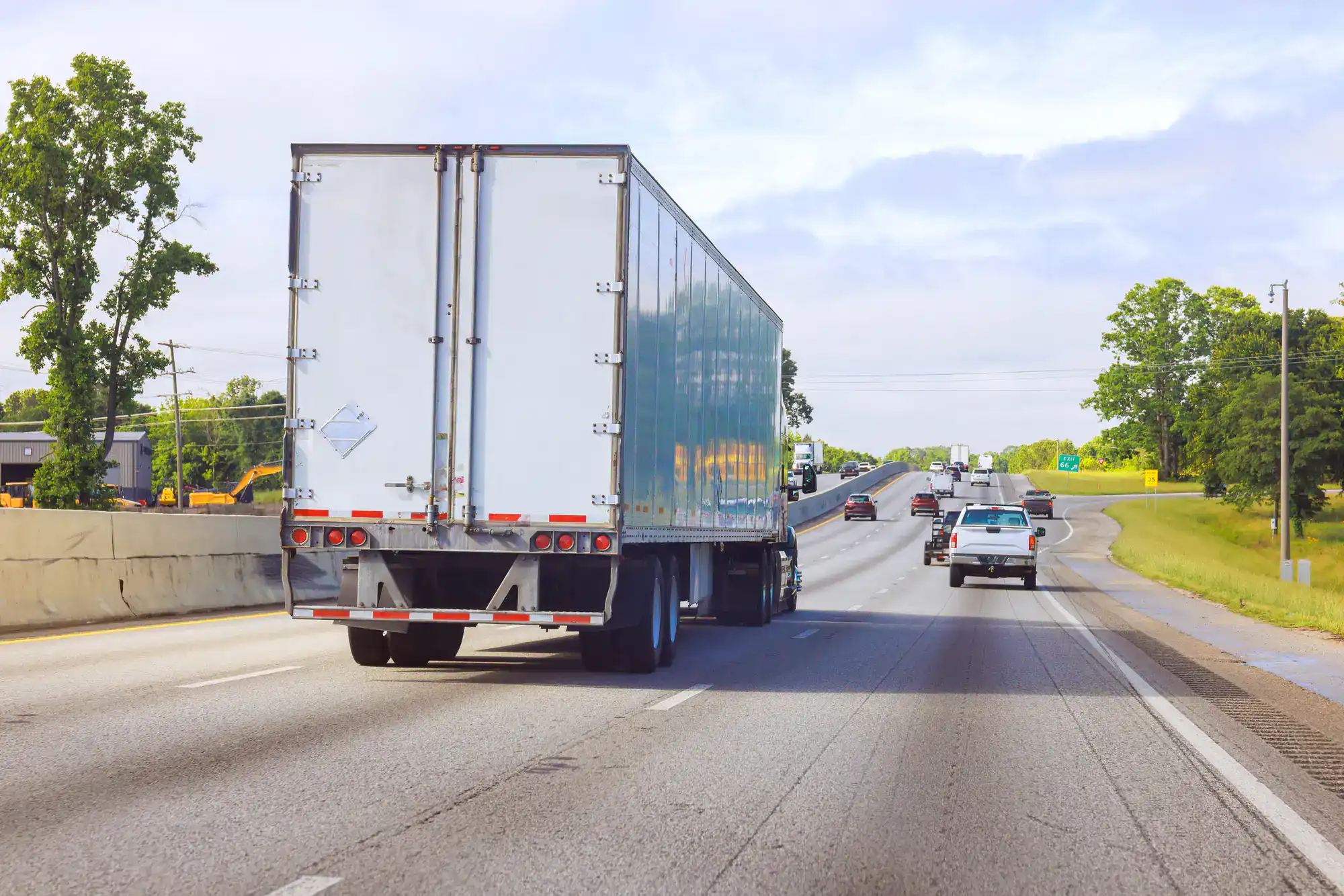
Yes and this is one of the most common points of confusion for operators running freight on I-10 through the Coachella Valley. California’s Clean Truck Check program applies to any qualifying heavy-duty vehicle operating on California’s public roads, regardless of where the truck is registered. If your truck is model year 2013 or newer with a GVWR over 14,000 pounds and it drives on California roads including I-10 through Palm Springs it is subject to the program.
CARB enforces this through remote emissions monitoring devices deployed along major freight corridors, and I-10 is one of the most actively monitored routes in the state. An out-of-state truck can be flagged and issued a Notice to Submit to Testing just like a California-registered truck. We handle testing and direct CTC-VIS submission for out-of-state operators the same way we handle California-registered fleets the process is identical, and the compliance certificate is the same.
The test itself is an OBD scan your truck’s onboard diagnostic system is read using CARB-certified testing equipment to check for active fault codes related to emissions control components like the diesel particulate filter, EGR system, and SCR system. It’s not a visual inspection, and it’s not a tailpipe emissions test. The OBD system in your 2013 or newer heavy-duty truck continuously monitors these components, and the scan reads what the system has recorded.
In Palm Springs, the desert heat is worth factoring into your timing. Sustained temperatures above 110°F put real stress on emissions control systems, and trucks that run through summer in the Coachella Valley are more likely to develop fault codes than trucks operating in more temperate climates. Testing before your compliance deadline rather than waiting until the last week of your window gives you time to address any issues and retest if needed. After the scan, we submit results directly to CARB’s CTC-VIS system. You receive your compliance certificate once the passing result is recorded.
No a failed OBD scan does not trigger immediate penalties. What triggers CARB enforcement is a missed compliance deadline, not a failing test result. If your truck’s OBD scan shows active fault codes, that means your truck needs repairs before it can pass. The compliance deadline is still your hard stop, and as long as you address the issues and submit a passing result before that deadline, you are not in violation.
This is exactly why testing early matters. If you wait until the final days of your compliance window and your truck fails, you may not have enough time to complete repairs and retest before the deadline closes. For Palm Springs-area operators especially those running resort delivery routes, construction jobs, or event logistics for the spring festival season in Indio a non-compliant truck during a busy period is a serious operational problem. Testing with enough runway to handle a repair is the practical move, not an abundance of caution.
CARB maintains a publicly searchable list of credentialed HD I/M testers on their website at ww2.arb.ca.gov. Before you book a Clean Truck Check test with anyone in Palm Springs or anywhere else in Riverside County you can search that list and confirm the tester’s credential is current. A tester who is not on that list cannot legally perform a valid Clean Truck Check, and a test performed by an uncredentialed tester will not be accepted by CARB. You would be non-compliant and out of pocket with nothing to show for it.
Our testers appear on CARB’s public list. The credential requires completing CARB’s official HD I/M Tester Training Course and passing the accompanying exam, and it must be renewed every two years. This is not a self-declared certification it is state-issued and publicly verifiable. Checking the list before you call any provider is a simple step that protects you from wasting time and money on a test that won’t count.
The requirement applies to diesel and alternative-fuel heavy-duty vehicles that are model year 2013 or newer and have a GVWR over 14,000 pounds. Both conditions must be met the truck has to be 2013 or newer AND over 14,000 pounds GVWR. If either condition isn’t met, the OBD testing requirement under the Clean Truck Check program does not apply.
In the Palm Springs area, the trucks that commonly fall into this category include delivery and service vehicles running the resort corridor on SR-111, construction trucks serving active projects throughout the Coachella Valley, waste management vehicles, HVAC and mechanical service trucks, and heavy freight carriers running I-10. If you’re unsure whether your specific truck qualifies, the GVWR is listed on the manufacturer’s label inside the driver-side door jamb. If it reads above 14,000 pounds and the model year is 2013 or newer, you’re in the program.
In 2025, the Clean Truck Check program requires semi-annual testing two compliance windows per year. That schedule is already in effect. By October 2027, most heavy-duty trucks will be required to test four times per year, moving to a quarterly compliance schedule. That’s a significant shift for fleet operators in the Coachella Valley who may have only recently started tracking compliance requirements.
For Palm Springs-area operators, the seasonal rhythm of the local economy adds another layer to think about. The resort and construction economy runs hardest from October through May. If your trucks are busiest during that window hauling supplies to hotels, running materials to job sites, or moving equipment for the spring festival season in Indio that’s exactly when a compliance lapse would cost you the most. Getting on a consistent testing schedule now, before the frequency doubles, is the kind of operational decision that keeps your trucks on the road when the work is actually there.
Useful Links
Other Services we provide in Palm Springs