Check Out Our Reviews!

Monterey Park sits at the intersection of three major Southern California freight corridors the I-710 on the west, I-10 on the north, and SR-60 on the south. If your truck is on any of those routes regularly, CARB’s enforcement reach is not abstract. Remote Emissions Monitoring Devices are deployed along these corridors, and a flagged truck means a Notice to Submit to Testing lands in your mailbox with a 30-day clock on it.
Getting a passing Clean Truck Check test on file does more than satisfy a regulatory checkbox. It keeps your DMV registration clear, keeps you eligible for port access and freight broker contracts, and removes the risk of fines that can reach $10,000 per vehicle per day. For an owner-operator running the port corridor on the 710 every week, that’s not a hypothetical it’s a real exposure that a single test eliminates.
The air quality context here matters too. Monterey Park has been specifically identified as a PM2.5 hotspot by community health researchers tracking goods movement pollution along the I-710 and SR-60 corridors. CARB’s Clean Truck Check program exists precisely because of communities like Monterey Park. Staying compliant isn’t just about your registration it’s part of operating responsibly in a neighborhood that feels the impact of freight traffic every day.
We don’t do general smog work with heavy-duty testing tacked on as an afterthought. CARB Clean Truck Check testing for model year 2013 and newer diesel trucks with a GVWR over 14,000 pounds is all we do. Every tester on our team holds a state-issued CARB credential earned through CARB’s official HD I/M Tester Training Course, and that credential is publicly listed on CARB’s own database. You can verify it before you ever call us.
We serve Los Angeles County, including Monterey Park and the surrounding western San Gabriel Valley. Whether your truck is staged near the Los Angeles Corporate Center along the I-710 corridor, operating out of a yard off the SR-60 near McCaslin Park, or running drayage between the ports and the Inland Empire, we come to you. No drop-off. No waiting room. We test on-site and submit results to CTC-VIS the same day.

The process starts with a quick call or booking to confirm your truck qualifies model year 2013 or newer, GVWR over 14,000 pounds. If it does, we schedule a time that works around your routes and availability. We come to your location in or near Monterey Park, whether that’s a commercial yard, a loading dock, a parking lot off Garvey Avenue, or anywhere else in Los Angeles County your truck sits when it’s not moving.
On-site, we connect a CARB-certified OBD testing device directly to your truck’s diagnostic port. This is not a generic scanner it’s the specific equipment CARB approves for HD I/M compliance testing. The scan reads your truck’s onboard emissions data and produces a result. If the truck passes, we submit that result electronically and directly to CARB’s CTC-VIS system right then. Your compliance record is updated in real time. You don’t log into any portal. You don’t upload anything. It’s done.
If the truck doesn’t pass on the first scan, we’ll walk you through exactly what the result means and what steps come next. A failed test isn’t the end it’s information. And knowing what’s wrong is the first step toward getting your truck back into compliance and keeping it working on the routes that matter.

Ready to get started?
Every Clean Truck Check test we perform covers what CARB actually requires: a full OBD scan using CARB-certified equipment, real-time result evaluation, and direct electronic submission to the CTC-VIS database. There’s no manual upload on your end, no portal confusion, and no risk of a submission error leaving your compliance record in limbo. The $31.18 annual CARB compliance fee which is separate from the testing fee and paid through CTC-VIS is something we can walk you through as well, because missing that fee triggers the same registration hold as a failed test.
For truck operators in Monterey Park and Los Angeles County, the testing frequency matters more than ever right now. In 2025, covered vehicles require two passing tests per year. By October 2027, that increases to four times per year for most trucks. If you’re managing more than one vehicle even a small fleet of three to five trucks running the 60 and the 710 that’s a scheduling and compliance calendar that needs to be actively managed, not reacted to when a DMV notice arrives.
This service applies specifically to diesel trucks that are model year 2013 or newer with a GVWR over 14,000 pounds. If you’re unsure whether your truck falls under the program, call us before you assume it doesn’t. The qualification rules catch more vehicles than most owners expect, and the consequences of operating an unchecked, non-compliant truck on California public roads including every freeway that borders Monterey Park are not worth the risk.
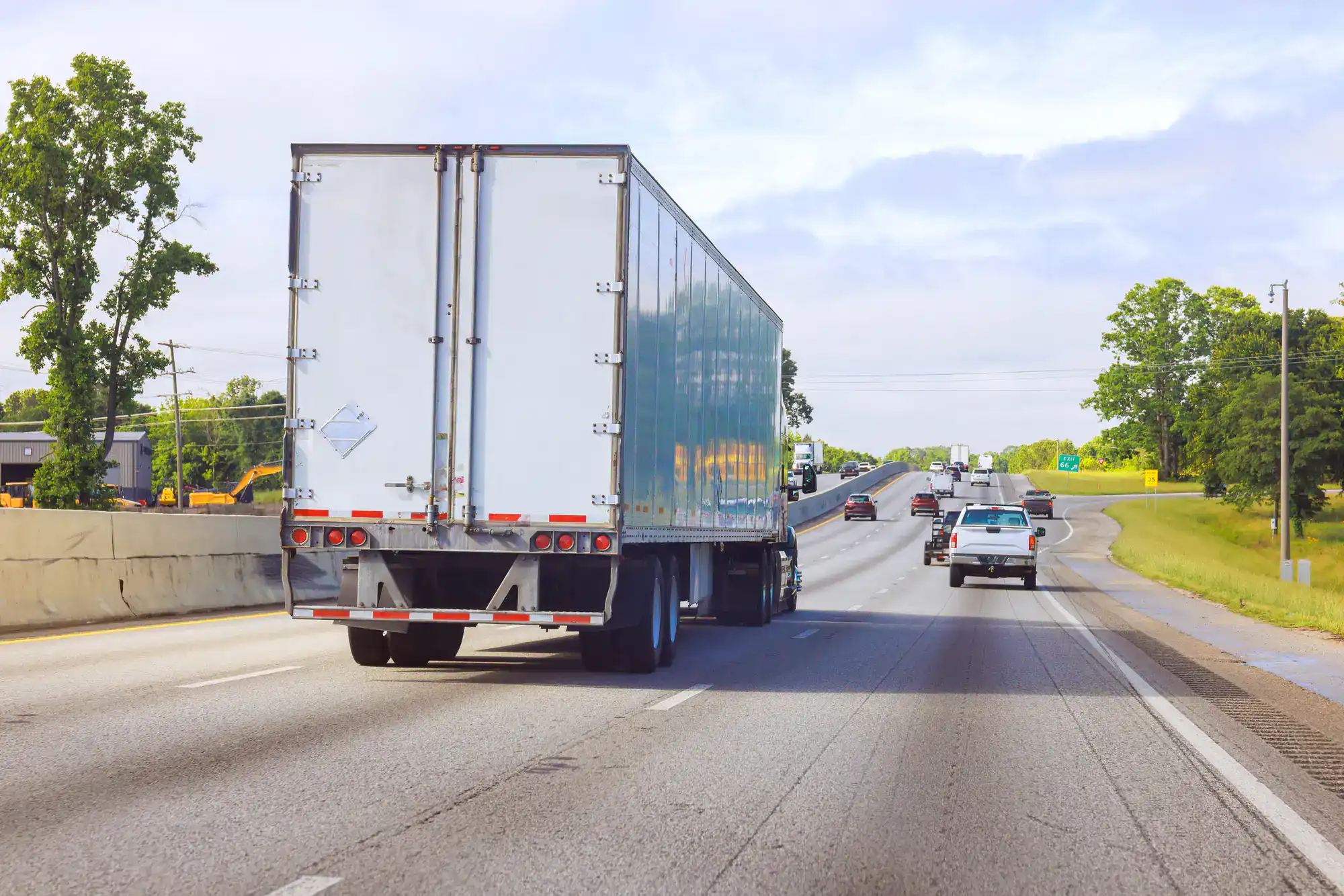
If your truck is a model year 2013 or newer diesel with a GVWR over 14,000 pounds, and it operates on California public roads including the I-710, SR-60, or I-10 that border Monterey Park then yes, it is subject to CARB’s Clean Truck Check requirements. The program does not make exceptions based on how frequently you pass through or whether your truck is registered in another state. If it runs on California roads, it falls under the program.
This is especially relevant for drayage operators and owner-operators who use the I-710 port corridor regularly. CARB deploys roadside Remote Emissions Monitoring Devices along major freight routes, including the 710 and 60 corridors that define Monterey Park’s western and southern edges. A flagged vehicle triggers a Notice to Submit to Testing with a 30-day deadline, regardless of where the truck is registered or how often it crosses state lines.
A failed test does not automatically mean your truck is shut down but it does start a clock. If your truck fails the OBD scan, CARB’s system records the result and you’ll need to address the underlying emissions issue before submitting a passing test. The specific fault codes the scan returns will tell you and your mechanic exactly what’s triggering the failure, which makes diagnosis faster than a general complaint about emissions performance.
What you want to avoid is ignoring a failed result or delaying repairs past your compliance deadline. A truck operating in Los Angeles County without a current passing test on file is exposed to DMV registration holds and daily fines. For an owner-operator in Monterey Park running freight between the ports and the San Gabriel Valley, even a short window of non-compliance can mean denied port access or a suspended freight broker contract both of which cost far more than the repair itself.
As of 2025, most covered heavy-duty diesel trucks are required to submit two passing Clean Truck Check tests per year semi-annual testing. That frequency increases to four times per year quarterly for most vehicles by October 2027. The specific schedule for your truck depends on its model year, engine type, and registration status, so it’s worth confirming your exact requirements rather than assuming the general rule applies.
For fleet operators in Monterey Park managing multiple trucks across different registration dates, this escalating frequency is a real planning challenge. Four tests per truck per year on a ten-truck fleet is forty compliance events annually. We can help you map out a testing calendar based on your fleet’s registration cycle so you’re scheduling proactively, not scrambling when a deadline hits. Getting ahead of the 2027 quarterly requirement now makes the transition significantly easier.
There is a STAR Certified smog station in Monterey Park SKY Smog & Test Only on South Garfield Avenue that has served the area since 2010. However, it serves passenger vehicles under the standard smog check program, which is a completely separate program from CARB’s Clean Truck Check. It does not perform OBD-based compliance testing for heavy-duty diesel vehicles over 14,000 pounds GVWR. If you bring a semi truck or a heavy-duty diesel to a standard smog shop, they simply cannot help you different equipment, different credential, different program entirely.
We specifically serve the heavy-duty vehicle population that CARB’s Clean Truck Check targets. Our testers hold a CARB-issued HD I/M credential not a general smog license and use CARB-certified OBD testing equipment designed for trucks, not passenger cars. If your truck needs a Clean Truck Check, a standard smog station in Monterey Park is not the answer, and finding that out after driving there wastes time you may not have if you’re working against a compliance deadline.
These are two separate charges, and confusing them is one of the most common mistakes truck owners make when trying to get into compliance. The CARB compliance fee $31.18 per vehicle in 2025, adjusted annually by the California Consumer Price Index is paid directly through CARB’s CTC-VIS portal and is required annually regardless of how many tests your truck submits. Think of it as a registration-style fee that keeps your vehicle enrolled in the program.
The testing fee is what you pay us to perform the actual OBD scan and submit the result. These are separate transactions, and missing either one can trigger a DMV registration hold. A truck operator in Monterey Park who pays the tester but forgets the annual CARB fee will still end up with a compliance problem. We walk every customer through both obligations so nothing falls through the cracks.
Yes and this catches a lot of operators off guard. CARB’s Clean Truck Check program applies to any qualifying heavy-duty diesel truck that operates on California public roads, regardless of where the truck is registered. If your truck is registered in Arizona, Nevada, Texas, or anywhere else but you regularly haul freight through California including on the I-710 port corridor or the SR-60 through the San Gabriel Valley you are subject to the program.
The I-710 and SR-60 corridors that run along Monterey Park’s western and southern borders are among the most heavily monitored freight routes in the state. CARB’s roadside Remote Emissions Monitoring Devices are active on these routes, and an out-of-state truck flagged as a potential high emitter will receive a Notice to Submit to Testing the same as any California-registered vehicle. We serve out-of-state operators running through Los Angeles County if your truck qualifies and runs these roads, we can get you tested and submitted before that 30-day window closes.
Useful Links
Other Services we provide in Monterey Park