Check Out Our Reviews!

Lakewood sits five to eight miles northeast of the Port of Long Beach, and the trucks operating out of this area don’t have the luxury of a compliance gap. If your certificate lapses, you’re not just looking at a DMV problem you’re looking at a port gate that won’t open, a freight broker who won’t dispatch you, and a fine structure that runs up to $10,000 per vehicle per day. That math adds up fast.
The SR-91 runs along Lakewood’s northern edge, and I-605 traces the eastern boundary. Both corridors are monitored by CARB’s roadside emissions monitoring devices. Trucks flagged on those routes receive a Notice to Submit to Testing with a 30-day deadline and that clock doesn’t pause for scheduling delays or portal confusion. Getting tested quickly and getting that result into CARB’s system immediately is the only thing that matters at that point.
When you test with us, your result goes directly into CTC-VIS using CARB-certified OBD equipment. You don’t log into a portal. You don’t upload anything. The moment your truck passes, your compliance status is current and you can make your next run knowing the gate will open.
We specialize exclusively in heavy-duty vehicle compliance not general smog testing that added a new service line. Every test we perform is on a qualifying heavy-duty vehicle model year 2013 or newer, GVWR over 14,000 pounds which is exactly the population CARB’s Clean Truck Check program targets. That specialization matters when the result has to count.
Our testers have completed CARB’s official HD I/M Tester Training Course, passed the required exam, and hold a state-issued credential that’s publicly verifiable on CARB’s website. The equipment we use on every test is CARB-certified not a generic OBD scanner, but the specific tooling CARB requires for results to be accepted. Lakewood operators who’ve had a test rejected because a tester used non-approved equipment know exactly why that distinction is worth asking about before you book.
We serve Los Angeles County including the port-adjacent communities along the SR-91 and I-605 corridors that Lakewood operators depend on as well as Riverside County, which matters for operators running loads all the way out to Inland Empire distribution hubs.

The Clean Truck Check is an OBD-based emissions test not a tailpipe test, not a visual inspection. A CARB-certified diagnostic device connects to your truck’s OBD port and reads the onboard emissions data directly. The process is straightforward, but it has to be done with the right equipment by a credentialed tester, or CARB won’t accept the result. That’s not a technicality it’s the reason some truck owners end up paying for a test twice.
Once your truck is connected and the test runs, the result is submitted electronically to CARB’s CTC-VIS system. There’s no manual step on your end. If your truck passes, your compliance record is updated in real time. If there’s a failure, you’ll know exactly what triggered it and you’ll have the information you need to address it before your deadline. For Lakewood operators running tight turnarounds between the port and Inland Empire drops, that clarity matters more than anything else.
If you received a Notice to Submit to Testing, the 30-day window starts from the date on that letter not from when you call. Passing tests can also be submitted up to 90 days before your compliance deadline, which means proactive operators can test early, handle any issues, and go into their deadline period without pressure. Either way, the process is the same: one test, direct submission, compliance confirmed.

Ready to get started?
This service applies to trucks that are model year 2013 or newer with a GVWR over 14,000 pounds. If your truck was built before 2013, or if it falls under that weight threshold, this is not the test for it and a standard smog check at a passenger car station like the ones you’ll find in neighboring Bellflower won’t satisfy CARB’s Clean Truck Check requirement either. Those are two separate programs, and confusing them is one of the most common mistakes Lakewood truck owners make when they’re trying to get compliant quickly.
For trucks that do qualify, every test we provide includes a full OBD diagnostic using CARB-certified equipment, direct electronic submission to CTC-VIS, and a clear result you can present to a port facility, freight broker, or DMV. There’s no ambiguity about whether the result was submitted or whether it was accepted you’ll know before the truck leaves.
Testing frequency in 2025 is semi-annual two tests per year, spaced roughly every six months. By October 2027, that requirement moves to quarterly for most trucks, meaning four tests per year. For fleet operators managing multiple vehicles on the SR-91 and I-605 corridors around Lakewood, building a reliable testing relationship now before the quarterly schedule kicks in is the practical move. Out-of-state carriers operating through the LA-Long Beach corridor are subject to these same requirements, regardless of where the truck is registered.
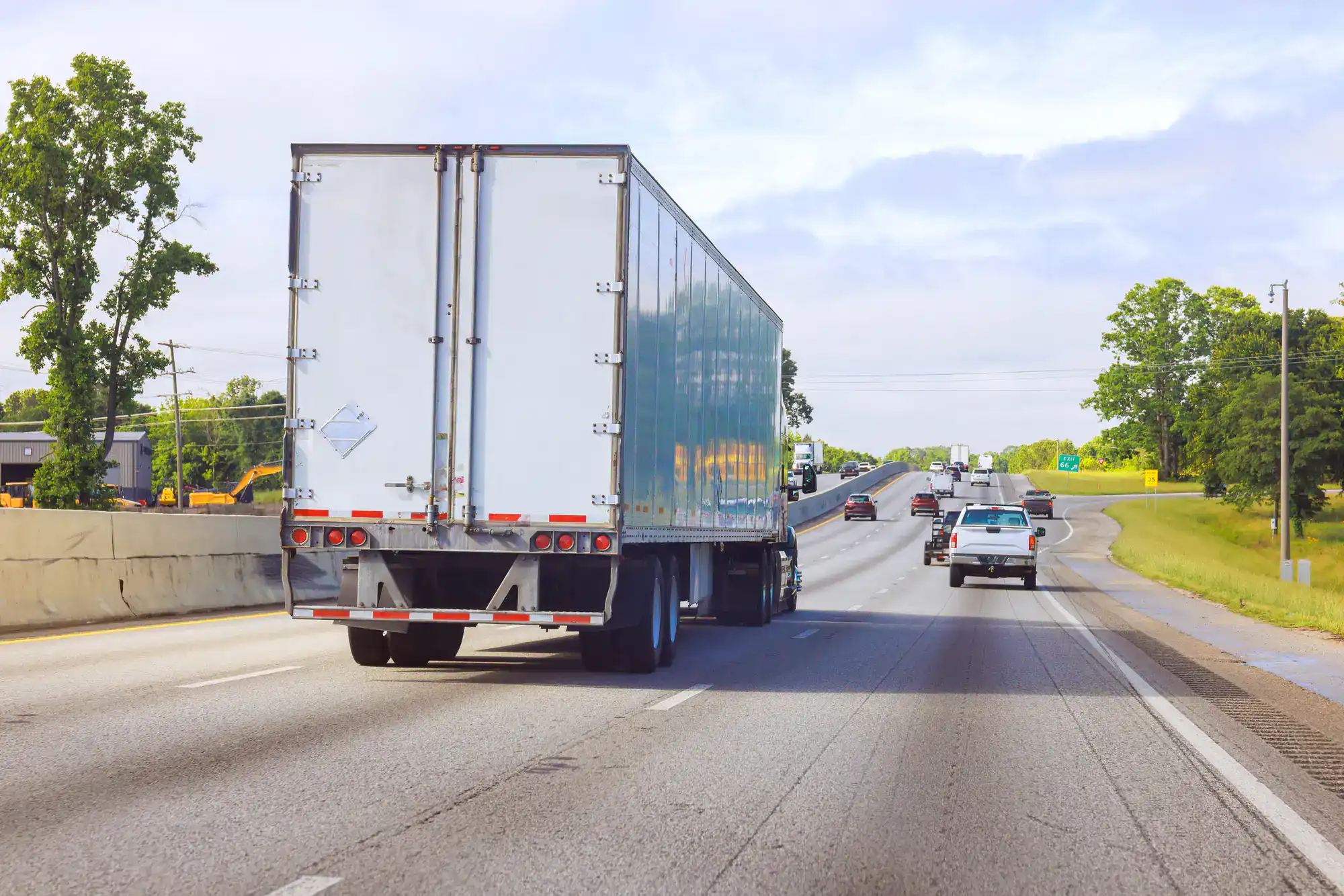
Yes and this is one of the most important things to understand if you’re operating in the Lakewood area. The Port of Long Beach requires a valid Clean Truck Check compliance certificate for access. If your certificate is lapsed or your truck hasn’t been tested, you will be turned away at the gate. That’s not a warning it’s how the port operates.
Beyond the port itself, freight brokers and cargo agents working in the LA-Long Beach corridor are required to verify compliance before awarding loads. So even if you’re not going to the port directly, a lapsed certificate can cut off your dispatch access entirely. If your truck is model year 2013 or newer with a GVWR over 14,000 pounds and it’s operating on California roads including SR-91 or I-605 through Lakewood CARB compliance testing is required. There’s no exemption for trucks that only run locally or only make occasional port trips.
CARB deploys roadside emissions monitoring devices at fixed and mobile locations throughout the state, and both SR-91 which runs along Lakewood’s northern border and I-605, which traces the city’s eastern edge, are active monitoring corridors. If your truck is flagged, CARB will issue a Notice to Submit to Testing. From the date on that letter, you have exactly 30 calendar days to produce a passing Clean Truck Check result from a CARB-credentialed tester and have it submitted to CTC-VIS.
That 30-day window moves fast, especially if you’re trying to schedule a test, get the result submitted, and still keep your truck running in the meantime. The most important thing you can do when you receive an NST letter is call immediately not in a week, not after the weekend. We perform the OBD test and submit directly to CTC-VIS, so your compliance status is updated without delay. Waiting on a tester who makes you manage the portal yourself adds risk you don’t need when you’re already working against a deadline.
These are two completely separate programs, and mixing them up is a costly mistake. A standard smog check the kind offered at passenger car stations throughout Lakewood and the surrounding area tests tailpipe emissions on light-duty vehicles. It has nothing to do with CARB’s Clean Truck Check program, and a passing smog check result will not satisfy your heavy-duty compliance requirement.
The Clean Truck Check is an OBD-based test designed specifically for model year 2013 or newer heavy-duty vehicles with a GVWR over 14,000 pounds. It reads onboard emissions data directly from the truck’s computer using CARB-certified diagnostic equipment, and the result must be submitted electronically to CARB’s CTC-VIS database by a credentialed HD I/M tester. The tester has to have completed CARB’s official training course and hold a valid state-issued credential that credential is publicly searchable on CARB’s website. If the person testing your truck can’t point you to their listing in that database, their results may not be accepted.
Starting in 2025, the Clean Truck Check program requires semi-annual testing two tests per year, roughly every six months. That schedule is already in effect, so if your truck hasn’t been tested in the past six months, you may already be past due.
By October 2027, the requirement escalates to quarterly testing for most trucks four tests per year. For Lakewood owner-operators running one or two trucks on port routes, that means building a testing schedule into your operating calendar now, not scrambling to find a credentialed tester four times a year starting in 2027. For fleet managers handling 10 or 20 trucks, the administrative load of quarterly compliance across an entire fleet is significant working with a tester who handles direct CTC-VIS submission on every vehicle removes a major piece of that burden. Compliance deadlines are tied to each vehicle’s registration cycle, so different trucks in the same fleet may have different testing windows throughout the year.
A failed test doesn’t mean your truck is done it means the OBD system flagged something that needs to be addressed before CARB will accept a passing result. The most common triggers are active fault codes, incomplete readiness monitors, or an emissions-related system that isn’t functioning within spec. When your truck fails, you’ll know exactly what the issue is the OBD data tells you.
From there, you take the truck to a qualified diesel mechanic to address the specific fault, then return for a retest. The important thing is timing: if you’re working against a compliance deadline or a 30-day NST window, every day between the failed test and the retest counts. Lakewood operators running port loads out of Long Beach don’t have the flexibility to let a repair drag on for two weeks. Get the fault codes in hand, get to a mechanic who knows heavy-duty diesel systems, and get back for a retest as quickly as possible. Passing tests can be submitted up to 90 days before your compliance deadline, so if you test early and fail, you still have time to fix and retest without missing the deadline.
Yes, fully. If a truck is operating on California public roads including the SR-91, I-605, and SR-19 corridors that run through and around Lakewood it is subject to CARB’s Clean Truck Check requirements regardless of where it’s registered. There is no out-of-state exemption. Carriers based in Nevada, Arizona, Texas, or anywhere else that run freight into the LA-Long Beach corridor must have a valid compliance certificate for any qualifying truck, meaning model year 2013 or newer with a GVWR over 14,000 pounds.
This comes up frequently for carriers who run loads into the Port of Long Beach from out of state and assume California rules only apply to California-registered fleets. Port facilities check compliance status at the gate they don’t check registration state. If the truck doesn’t have a valid certificate in CTC-VIS, it doesn’t get in. We serve Los Angeles County and can test out-of-state trucks operating in the area the same way we test locally registered fleets same CARB-certified equipment, same direct CTC-VIS submission, same result.
Useful Links
Other Services we provide in Lakewood