Check Out Our Reviews!

When your Clean Truck Check is current, you’re not just checking a box you’re protecting your ability to work. A DMV registration hold doesn’t send you a warning. It just stops your truck. For owner-operators running routes through Garnet, North Palm Springs, or out toward the High Desert on SR-62, that kind of interruption doesn’t just cost a day. It can cost a load contract.
Garnet sits right at the I-10 and SR-62 interchange one of the most actively monitored commercial vehicle corridors in Riverside County. CARB’s roadside emissions monitoring devices are deployed on exactly these kinds of high-volume freight routes. If your truck gets flagged, you’re looking at a Notice to Submit to Testing with a 30-day window to respond. That’s not a lot of runway when you’re running a tight schedule.
The Coachella Valley’s heat is also worth understanding here. Summer temperatures that regularly push past 110°F put real stress on diesel particulate filters and exhaust systems the exact components a Clean Truck Check OBD scan evaluates. A truck that ran clean last winter can develop fault codes after a desert summer. Staying on top of testing means you catch those issues before CARB does.
All SMOG Motors is not a general smog shop that added a new service line. Every test we perform is on a model year 2013 or newer heavy-duty diesel truck with a GVWR over 14,000 pounds the exact vehicles California’s Clean Truck Check program was built for. Our equipment is CARB-certified. Our testers hold a current CARB-issued credential that you can verify yourself on the state’s public database at arb.ca.gov before you ever book.
Serving the Garnet area and broader Riverside County means understanding the specific environment trucks operate in here. The routes, the enforcement pressure on the I-10 corridor, the heat cycles that wear on emissions systems none of that is abstract to us. It’s the operating reality of every customer we work with in this region.
When your test is done, results go directly to CARB’s CTC-VIS system. You don’t touch a portal. You don’t upload anything. You get your compliance certificate and get back on the road.

It starts with scheduling. You call or book online, confirm your truck qualifies model year 2013 or newer, GVWR over 14,000 pounds and we get you on the calendar. For trucks operating in and around Garnet and the broader Coachella Valley, we know the area and can work around your route schedule.
When the test happens, a CARB-certified OBD device connects directly to your truck’s onboard diagnostic system. This is not a visual inspection. It reads your truck’s emissions-related fault codes and system status in real time. The equipment we use is specifically approved by the California Air Resources Board for Clean Truck Check compliance not a standard shop scanner. That distinction matters, because a test performed with non-approved equipment won’t be accepted by CARB, no matter who ran it.
Once your truck passes, results are submitted electronically to CARB’s Clean Truck Check Vehicle Inspection System immediately. You receive your compliance documentation, and your record in CTC-VIS is updated. No portal navigation on your end. No waiting to find out if the submission went through. The test is done, the record is filed, and you’re compliant.

Ready to get started?
The Clean Truck Check is an OBD-based emissions compliance test required by California law under Senate Bill 210. It applies specifically to diesel trucks that are model year 2013 or newer with a GVWR over 14,000 pounds. If your truck doesn’t meet both of those criteria, this test doesn’t apply to you. If it does, you’re required to test twice a year right now and that moves to four times a year by October 2027.
What you get with us is the full test performed with CARB-certified equipment, run by a credentialed tester, with direct electronic submission to CTC-VIS included. There’s also a separate annual compliance fee of $31.18 per vehicle paid directly to CARB that’s not part of the testing fee, but we’ll make sure you understand exactly what you owe and to whom so there’s no confusion at the end.
For Garnet-area operators dealing with the heat, the dust, and the enforcement environment on the I-10 and SR-62 corridor, having a tester who knows Riverside County and submits your results on the spot is the practical difference between a smooth compliance cycle and a scramble. Agricultural haulers, construction trucks, inter-regional carriers running through the Coachella Valley if the truck qualifies, we test it and file it, same visit.
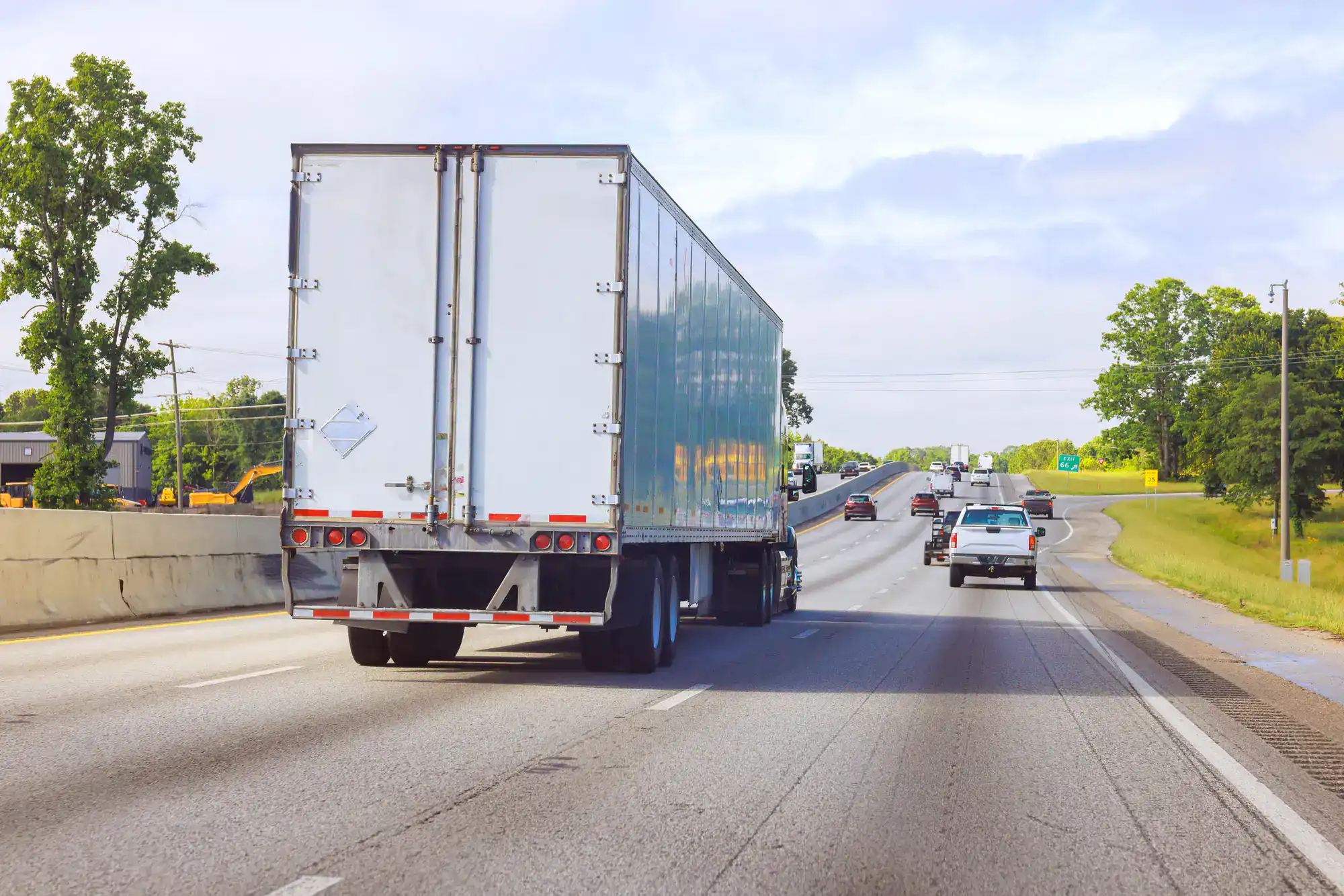
If your truck is a model year 2013 or newer diesel with a GVWR over 14,000 pounds, yes California’s Clean Truck Check program requires it. Both conditions have to be true. A 2015 diesel truck under 14,000 pounds GVWR doesn’t qualify. A pre-2013 heavy truck doesn’t qualify either. The program was built specifically for OBD-equipped heavy-duty diesel vehicles in that weight and model year range.
For operators in Garnet and the surrounding Riverside County area, the compliance requirement applies regardless of whether you’re running local routes through the Coachella Valley or hauling long-distance on I-10. If the truck meets the criteria and it’s operating on California roads, it needs to be registered in CARB’s CTC-VIS system and tested on schedule. If you’re not sure whether your specific truck qualifies, call us and we’ll tell you straight.
Missing your compliance deadline triggers a DMV registration hold on your truck. That means you can’t legally renew your registration until the hold is cleared which requires a passing Clean Truck Check test submitted to CARB’s CTC-VIS system by a credentialed tester. Beyond the registration hold, CARB can assess penalties of up to $10,000 per vehicle per day for ongoing non-compliance.
For owner-operators running the I-10 through Garnet or heading north on SR-62 toward the High Desert, a truck with a blocked registration isn’t just a paperwork problem. It’s a truck you can’t put on the road without legal exposure. The fastest path through a registration hold is a passing test and immediate CTC-VIS submission which is exactly what we provide.
As of 2025, the requirement is semi-annual two tests per year, spaced roughly six months apart. That schedule is already in effect and actively enforced. By October 2027, most subject vehicles will move to quarterly testing, meaning four tests per year. The escalation is built into the program and isn’t going away.
For fleet managers and owner-operators in Riverside County, this means compliance is now a recurring operational task, not a once-a-year item. If you’re running one truck or a small fleet out of the Garnet area, building a relationship with a credentialed tester now while it’s still twice a year makes the transition to quarterly testing a lot smoother than scrambling to find a tester every 90 days. We serve Riverside County year-round and can keep your schedule on track.
Yes. California’s Clean Truck Check requirements apply to any qualifying diesel truck operating on California public roads regardless of where the truck is registered. If you’re running a 2013 or newer diesel over 14,000 pounds GVWR through California on I-10, whether you’re registered in Arizona, Nevada, Texas, or anywhere else, you are subject to CARB’s program the moment you’re operating in the state.
CARB uses roadside emissions monitoring devices on high-volume freight corridors, and the I-10 through the Coachella Valley near Garnet is exactly the kind of route where those devices are active. Out-of-state carriers who haven’t registered in CTC-VIS or completed compliance testing are taking a real risk every time they enter California. We can test your truck and submit your results to CARB directly, keeping you legal on one of the busiest interstate freight routes in the country.
The Clean Truck Check uses a CARB-certified OBD device to read your truck’s onboard diagnostic system directly. It’s evaluating the status of your emissions-related systems things like your diesel particulate filter, exhaust gas recirculation system, and selective catalytic reduction system by pulling real-time fault codes and readiness monitors from the truck’s computer. It’s not a visual inspection or a tailpipe test.
This matters especially for trucks operating in the Coachella Valley heat. Temperatures regularly exceeding 110°F in the Garnet area put significant stress on DPF and EGR components, and heat-related wear can trigger fault codes that wouldn’t show up in cooler climates. A truck that passed its last test can develop new codes after a summer of desert operation. That’s why staying current on your semi-annual testing schedule rather than waiting until a deadline is imminent gives you time to address issues before they become a compliance problem.
The two are separate charges. The annual compliance fee paid directly to CARB is $31.18 per vehicle in 2025, and it’s adjusted each year based on the California Consumer Price Index. That fee goes to CARB, not to your tester. The testing fee what you pay All SMOG Motors to perform the OBD scan and submit your results to CTC-VIS is a separate cost charged by the credentialed testing provider.
It’s a common source of confusion, especially for owner-operators in Riverside County who are managing their own compliance without a fleet administrator handling the paperwork. When you book with us, we’ll walk you through exactly what you owe, to whom, and when so you’re not caught off guard by a fee you didn’t expect. The goal is a clean test, a filed result, and a compliance record that reflects it, without any surprises on your end.
Useful Links
Other Services we provide in Garnet