Check Out Our Reviews!

The I-710 doesn’t just end at Valley Boulevard it ends at the edge of one of the most CARB-active freight corridors in the country. If you’re running drayage loads from the ports and staging in Alhambra or anywhere in the western San Gabriel Valley, your truck is exactly what the Clean Truck Check program was built to target. That’s not a threat it’s just the reality of operating in this corridor.
When your compliance certificate is current and your test result is already on file with CARB, you don’t have to sweat a roadside flag, a DMV hold, or a port access denial. Those aren’t abstract risks here. CARB deploys remote emissions monitoring devices along active freight corridors, and the I-710 is one of them. A flagged truck gets a Notice to Submit to Testing with a 30-day deadline and only a CARB-credentialed tester using approved equipment can produce a result the state will actually accept.
For owner-operators in Alhambra who can’t afford a week of downtime, getting ahead of that deadline is the whole game. A valid compliance certificate means your truck keeps earning. A lapsed one means it doesn’t.
We are a CARB-credentialed Clean Truck Check testing provider serving Los Angeles County which means Alhambra, Monterey Park, San Gabriel, and the surrounding San Gabriel Valley are squarely within our territory. This isn’t a general smog shop that added a new service line after the program launched. Our entire operation is built around one thing: OBD-based emissions compliance testing for heavy-duty vehicles that are model year 2013 or newer with a GVWR over 14,000 pounds.
Every tester on our team has completed CARB’s official HD I/M training course, passed the state exam, and holds a credential that’s publicly verifiable on CARB’s own database. You can look it up before you book and you should. In a market where providers have rushed in since the program launched in 2023, that verifiability matters. Test results are submitted electronically and directly to CARB’s CTC-VIS system the moment the test is complete. No portal headaches, no manual uploads, no wondering if your record is actually on file.

It starts with confirming your truck qualifies. The Clean Truck Check program applies specifically to vehicles that are model year 2013 or newer and have a GVWR over 14,000 pounds. If your truck meets both of those criteria and operates on California public roads regardless of where it’s registered it needs a valid compliance certificate. A lot of operators running loads on the I-710 corridor out of Alhambra have trucks registered in other states. That doesn’t exempt them. If the truck runs in California, it falls under CARB’s jurisdiction.
Once eligibility is confirmed, you schedule your test. We serve LA County, so reaching Alhambra and the surrounding SGV is straightforward. The test itself uses CARB-certified OBD testing equipment not a generic scanner, not a third-party tool that “works the same.” CARB requires specific approved devices, and using anything else means your result won’t be accepted. The OBD scan reads directly from your truck’s onboard diagnostic system and checks emissions-related data against CARB’s thresholds.
After the test, results are submitted electronically and directly to CARB’s CTC-VIS database. Your compliance record is updated immediately. If you’ve been managing CTC-VIS yourself and it’s been a frustration, this step alone is worth it you don’t have to touch the portal at all.

Ready to get started?
The Clean Truck Check is an OBD-based inspection your truck’s onboard diagnostic system gets read directly using CARB-certified equipment, and the result tells CARB whether your vehicle’s emissions controls are functioning within the required range. It’s not a tailpipe sniff test, and it’s not the same as a standard smog check for a passenger car. The smog stations along Atlantic Boulevard or Valley Boulevard in Alhambra that handle your personal vehicle cannot perform this test. The programs are entirely separate different equipment, different credentials, different databases.
As of 2025, the Clean Truck Check requires semi-annual testing two tests per year. That cadence escalates to quarterly testing by October 2027, meaning four tests per year for most trucks. The annual CARB compliance fee is $31.18 per vehicle and is paid separately through the CTC-VIS portal that fee is not the same as the testing fee you pay to a credentialed tester. Both are required. Missing either one leaves your truck non-compliant, which in Los Angeles County means a real risk of DMV registration holds, port access denial, and fines that can reach up to $10,000 per vehicle per day.
If your truck fails, it’s not an automatic fine but it does start a clock. The vehicle needs repairs and a passing retest before your compliance deadline. We can walk you through exactly what triggered the failure and what the retest process looks like, so you’re not left guessing about next steps.
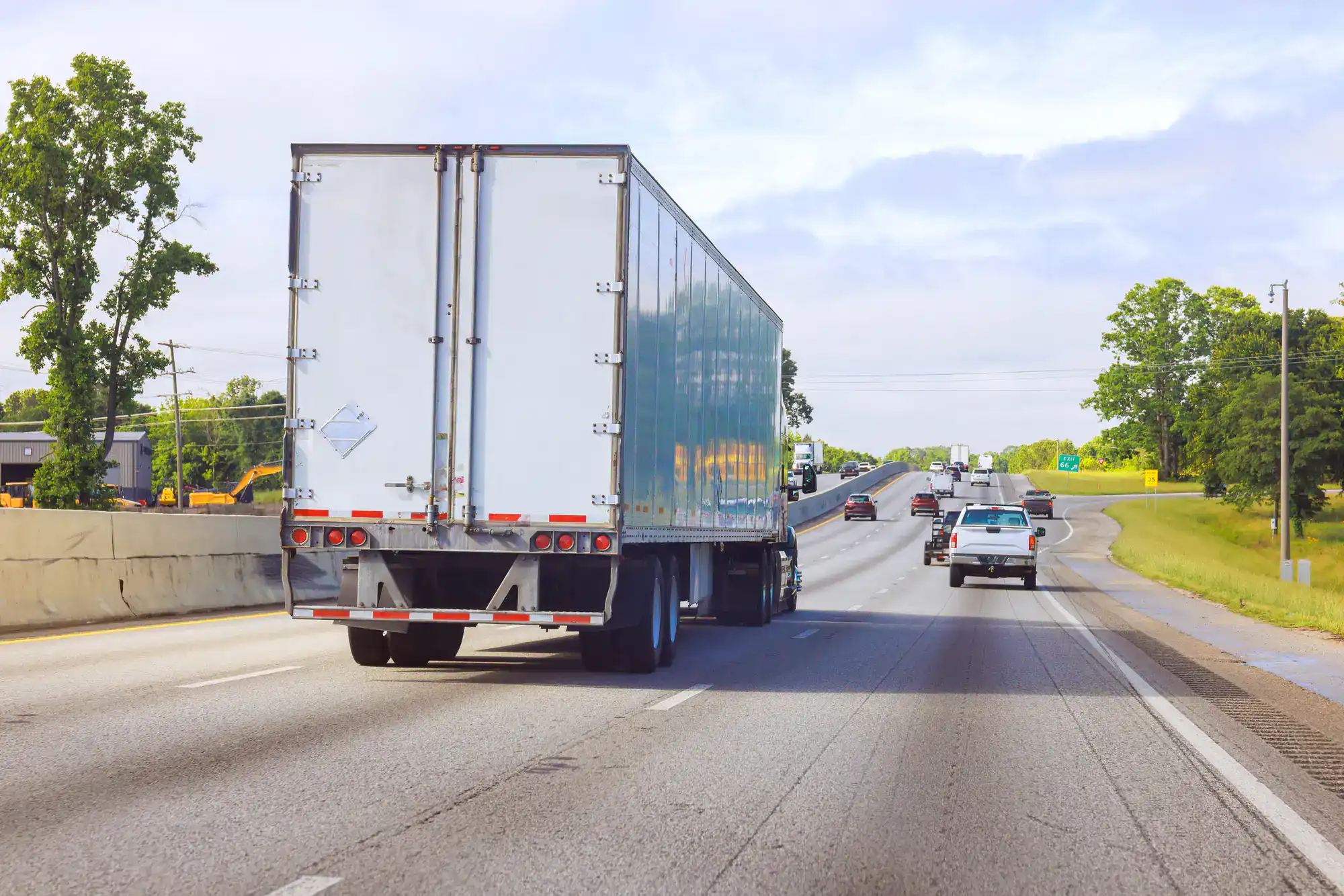
If your truck is model year 2013 or newer and has a GVWR over 14,000 pounds, yes it needs a valid Clean Truck Check compliance certificate, regardless of which routes it runs. The I-710 corridor from the Ports of Los Angeles and Long Beach to its northern terminus at Valley Boulevard in Alhambra is one of the most actively monitored freight corridors in California. CARB uses remote emissions monitoring devices along corridors like this one, and trucks flagged as potential high emitters receive a Notice to Submit to Testing with a hard 30-calendar-day deadline.
Operating on the I-710 without a current compliance certificate is a real enforcement risk not a theoretical one. DMV registration holds are automatic for non-compliant vehicles, and port facilities can deny access to trucks that can’t show a valid certificate. If you’re running loads out of the San Gabriel Valley, getting your compliance current before a flag happens is always the better play.
They’re completely different programs. A standard smog check the kind you’d get for a passenger car or a light truck at any licensed station in Alhambra is administered through the Bureau of Automotive Repair and tests vehicles under 14,000 pounds GVWR using tailpipe emissions testing. The Clean Truck Check is a California Air Resources Board program that applies specifically to heavy-duty vehicles that are model year 2013 or newer with a GVWR over 14,000 pounds. It uses OBD-based testing with CARB-certified equipment, and results are submitted directly to CARB’s CTC-VIS database.
A regular smog station cannot perform a Clean Truck Check, and a Clean Truck Check tester does not replace your regular smog check for lighter vehicles. If you bring a qualifying heavy-duty truck to a standard smog station, they cannot produce a result that CARB will accept. You need a tester who holds a current CARB HD I/M credential and you can verify that credential directly on CARB’s public database before you book.
Yes. CARB’s Clean Truck Check applies to any heavy-duty vehicle operating on California public roads, regardless of where it’s registered. If your truck is model year 2013 or newer, has a GVWR over 14,000 pounds, and runs loads in California even seasonally it falls under CARB’s jurisdiction. This is a common situation for owner-operators in the Alhambra area who live in the San Gabriel Valley but operate trucks registered in Arizona, Nevada, or Texas.
The compliance requirement is tied to where the vehicle operates, not where it’s titled. Out-of-state registration does not exempt your truck from DMV holds, port access requirements, or enforcement action in California. If you’re unsure whether your specific vehicle qualifies, the clearest way to find out is to confirm the model year and GVWR those two data points determine eligibility, and we can help you confirm before scheduling a test.
A failed test doesn’t trigger an immediate fine but it does start a clock you need to pay attention to. When a truck fails the Clean Truck Check, it means the OBD scan identified an issue with one or more emissions-related systems. The vehicle needs to be repaired and retested before the compliance deadline. If you received a Notice to Submit to Testing from CARB, that deadline is 30 calendar days from the date on the notice and the retest result needs to come from a CARB-credentialed tester using approved equipment.
For operators in Alhambra running time-sensitive drayage loads, the goal is to get the repair done and the retest scheduled as quickly as possible. A truck sitting in a yard waiting on a compliance certificate isn’t earning. We can explain specifically what the failed scan flagged, which helps you have a more productive conversation with your mechanic before the repair work starts so you’re not chasing the wrong problem.
As of 2025, the Clean Truck Check program requires semi-annual testing two tests per year for most qualifying vehicles. That frequency is scheduled to increase to quarterly testing by October 2027, which means four tests per year. For fleet managers and owner-operators in the San Gabriel Valley managing multiple trucks, that cadence adds up quickly, and staying on top of each vehicle’s compliance window becomes a real operational task.
The testing schedule is tied to your vehicle’s compliance anniversary date, not a fixed calendar period so different trucks in a fleet may have different windows. Missing a window doesn’t just mean a late test; it means your truck is technically non-compliant from the moment the window closes, which opens the door to DMV registration holds and enforcement action. Establishing a relationship with a credentialed tester now, before the quarterly requirement kicks in, makes the process significantly easier to manage going forward.
Yes. We serve Los Angeles County, which includes Alhambra, Monterey Park, San Gabriel, Rosemead, and the broader western San Gabriel Valley. Many owner-operators in this area don’t stage their trucks at a fixed commercial yard they work out of residential streets or small lots in and around the SGV, which is a practical reality of how drayage operations run in this part of LA County.
One thing worth knowing if you’re staging in Alhambra specifically: the city prohibits overnight parking on its major commercial arterials, including Valley Boulevard, Atlantic Boulevard, Fremont Avenue, Garfield Avenue, Main Street, and Mission Road. If you’re coordinating a test appointment, it’s worth confirming where your truck will be accessible during the scheduled window. We can work with you on logistics to make sure the appointment runs without any scheduling friction on your end.
Useful Links
Other Services we provide in Alhambra